

Wheel Dog
Who’s pulling for you?

You’re reading the first story in Thaw, Tractor Beam’s Winter 2025 issue. You can read Jeff VanderMeer’s guest editor letter and the remaining stories here. Subscribe to receive future Tractor Beam issues in your inbox as soon as they drop!
Story by: Parker M. O’Neill
Annotations by: Jeff VanderMeer
Art by: Jump Jirakaweekul
Sebastien is almost done hitching the last few dogs to the sled when the whole team abruptly raises hell.
Bruno’s ears and nose start twitching first, which gives Seb about a half second of warning before they all start barking and howling like crazy. Fou slips right out of his grasp and bolts, clearing the fence with a leap and hurtling around towards the front of the house. Whiskey goes after her, then Fritter. Whoever’s knocking on his door is about to get one hell of a surprise.
This is the last goddamn thing Seb needs. Possible blizzard on the way and he’s already behind schedule. He isn’t even sure how long this ride will be—it all depends on what’s wrong with the Line, and whether he has the ability to repair it right on the spot. Either way, he needs to get going as soon as he can, but a few decades’ experience tells him that the only way to calm the dogs down is to address whatever’s working them up.
He ticks through a mental shortlist as he wades through knee-deep snow in his side yard. It can’t be the ecologist, who won’t be back out in the rewild until summer, nor the veterinarian, who won’t come check on the dogs until the long run is over. God, it would be nice if it were Sue, but he would’ve heard the whine of her snowmachine’s aging electric engine by now.
Plus, they haven’t spoken in six—no, eight months.
He rounds the corner. Not Sue, not the ecologist, not the vet—a stranger. An unfamiliar young man standing with his back to the front door, waving a crowbar at the trio of dogs surrounding him.
The dogs are on alert. Unexpected company at the house is unthinkable to them. The man wiggles the weapon uncertainly, like he doesn’t really know what to do with it, and when Seb steps closer, the stranger turns, shivering in the cold, crowbar held like a broadsword.
“I, uh, was hoping I could get a ride,” the stranger says. Their eyes meet, and though he’s never seen this man before, he recognizes the desperate look on his face at the exact same moment he notices that the hinge pins on the door are halfway ripped out.
A whole pack of thoughts come to Seb at once.
Haven’t had my house broken into since I left Montreal.
This kid looks like he’s freezing to death.
I’m already late. I don’t have time for this.
But I can’t leave him here alone while I’m out on the long run.
Fritter takes a hesitant step forward, sniffing, then licks the stranger’s hand.
Sue used to say what she liked about Seb was how quick he forgave without forgetting; also that he was great in a crisis and less great out of one. She said he always made his decision in the first few seconds and stuck to it, which is part of what makes him such a good musher. It’s also what makes him nod, now, at the young man trying to bust down his front door.
“Alright,” Seb says, “Let’s get you inside. We’ll see if I have any snowpants that’ll fit you.”
****
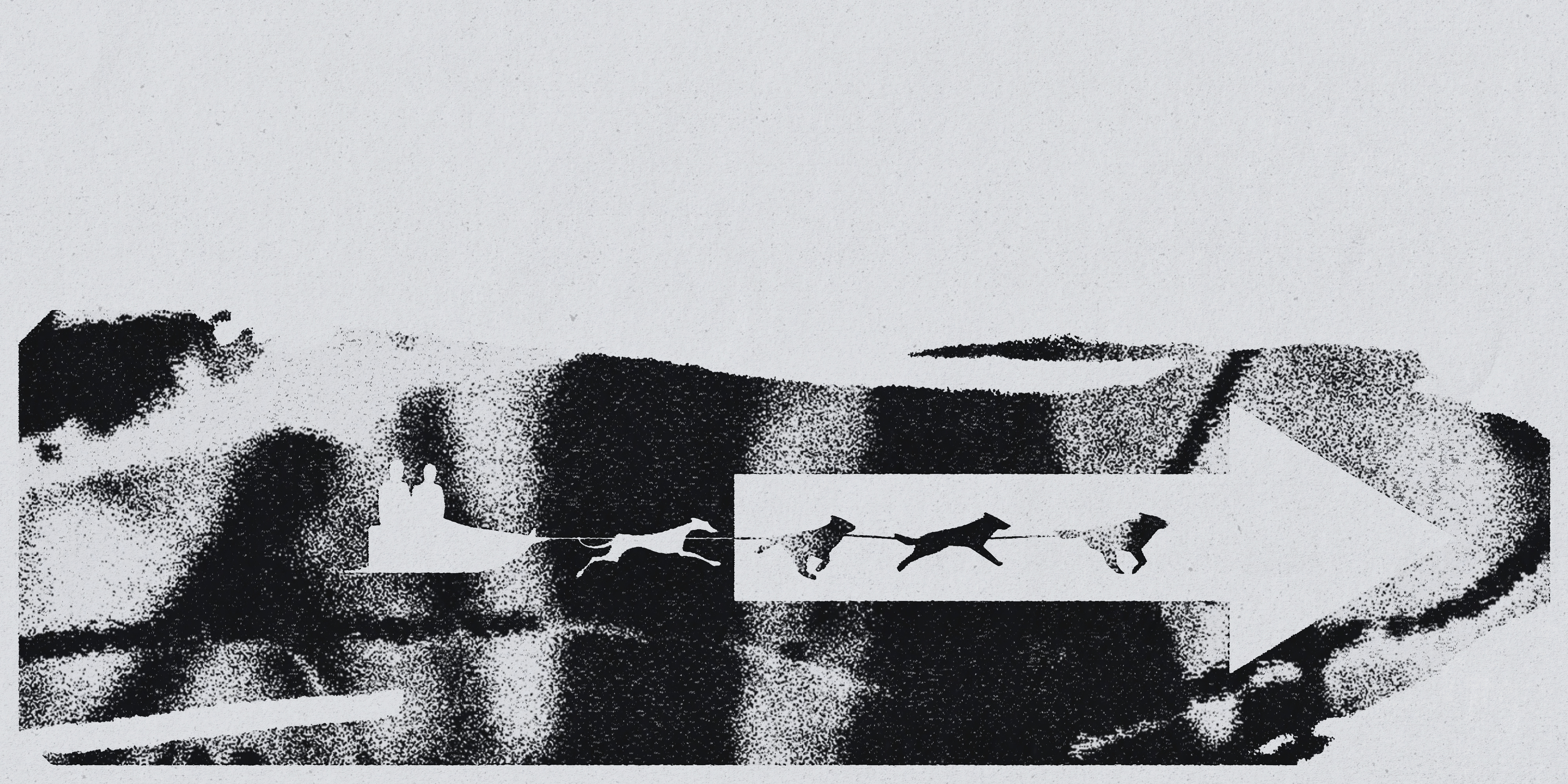
It’s well below freezing, snow packed feet deep, wild gusts of biting wind coming down out of the hills to meet the sled head on. The sky is clouded over. The dogs are in heaven.
They live for this, even without a full team, even pulling an extra hundred and thirty pounds of dead weight. Bruno and Brie lead the team, with Fritter and Cabernet behind them in the swing position. Then Tito and Goliath, and finally the wheel dogs, Whiskey and Fou. Each in the place where they can contribute the most; each more keen to run than anything else. And anyways there’s nothing else to do out here, just miles and miles of snow in all directions.
Sometimes, when Seb’s out here alone with the dogs, he wonders what it must be like to do the very thing you’re bred for. The ecstasy of it. He inevitably gets in his head about what it even means to be bred for something—whether the dogs would care if they knew how many hundreds of years of selection had created them.
He often spends hours lost in these thoughts, sled coursing through the thick snow of the rewild, the gray horizon a hollow, static thing in the distance, no sound but the wind and the footsteps and the panting of the dogs.
But he has no such luxury today. He’s worried about the weather, suspecting it’ll turn even worse, and he already feels like he’s racing the clock. So many stops to make.
“The rewild will kill you, she told him, just as good as the regular wild would have. None of those teams made it without support; without using every lifeline available to them.”
Erik, the erstwhile home invader, is—it turns out—pretty talkative. Since the team set off, he’s kept up a more-or-less constant stream of questions, opinions, and complaints.
“Why can’t we just take a snowmobile?”
“How much colder is it gonna get?”
“You could’ve let me stay in your house while you weren’t using it.”
“Is this sled made out of wood?”
“I want you to know, I wasn’t going to steal anything. I just thought your place was abandoned.”
Ouch.
Seb ignores him. He wonders if this was a stupid decision. He’s doing his best to keep tactfully silent about the fact that Erik is clearly running from something. The kid yawns again, stretching in the sled’s basket, where he’s taking up a good chunk of the space usually reserved for emergency supplies and food. We’ll need to resupply at one of the roadhouse caches, Sebastien thinks. Tabarnak. Last thing I need. Couldn’t he have tried to break into someone else’s house?
But there is no one else. Not another structure around for many miles.
“Whoa,” he says, loud enough that Bruno can hear up front, then he watches as the command travels down the line. The dogs slow, and he steps on the brake for a little more encouragement. When the sled comes to a halt, he stomps the snow hook down to anchor it, then leans forward and taps Erik on the shoulder.
“I need to check on something. Stay here,” he says, then he pauses. Does he really want to leave this stranger alone with the team? If Erik drives off with the dogs, Seb will have no way to stop him.
“Where are you from?” he asks.
Erik looks up at him, mouth hanging slightly open. With Seb’s best pair of snowgoggles on, he looks like a horse fly, compound eyes staring dully.
“Where are you from?” Seb repeats.
“Syracuse,” he finally says.
Kid’s come a long way. Syracuse isn’t too far from Montreal. A million miles away from Alaska, obviously. Prime recruitment turf for the Academy–and not the kind of place somebody learns to mush.
“Don’t get off the sled,” Seb says.
****
He checks the first cloudpoint on the Line as fast as he can.
This one is the newest-installed, and thus the least likely to have any issue. It’s also the least obtrusive, intended to have as little negative impact as possible on the environment of the rewild.
This makes it a huge pain in the ass to find.
If not for the gathering dusk, he’d be able to see the plume of water jetting out of it for miles. As it is, he only knows the cloudpoint is somewhere in this little copse of saplings because it’s the only greenery around. This is where the water comes out, so, logically, this is where more things grow.
Not that any water is coming out now. That’s one thing working, at least–the perimeter heat sensors that deactivate the Line’s flow when any large mammals are nearby. It’s a delicate game—scare off the moose without interfering with the natural course of their lives too much.
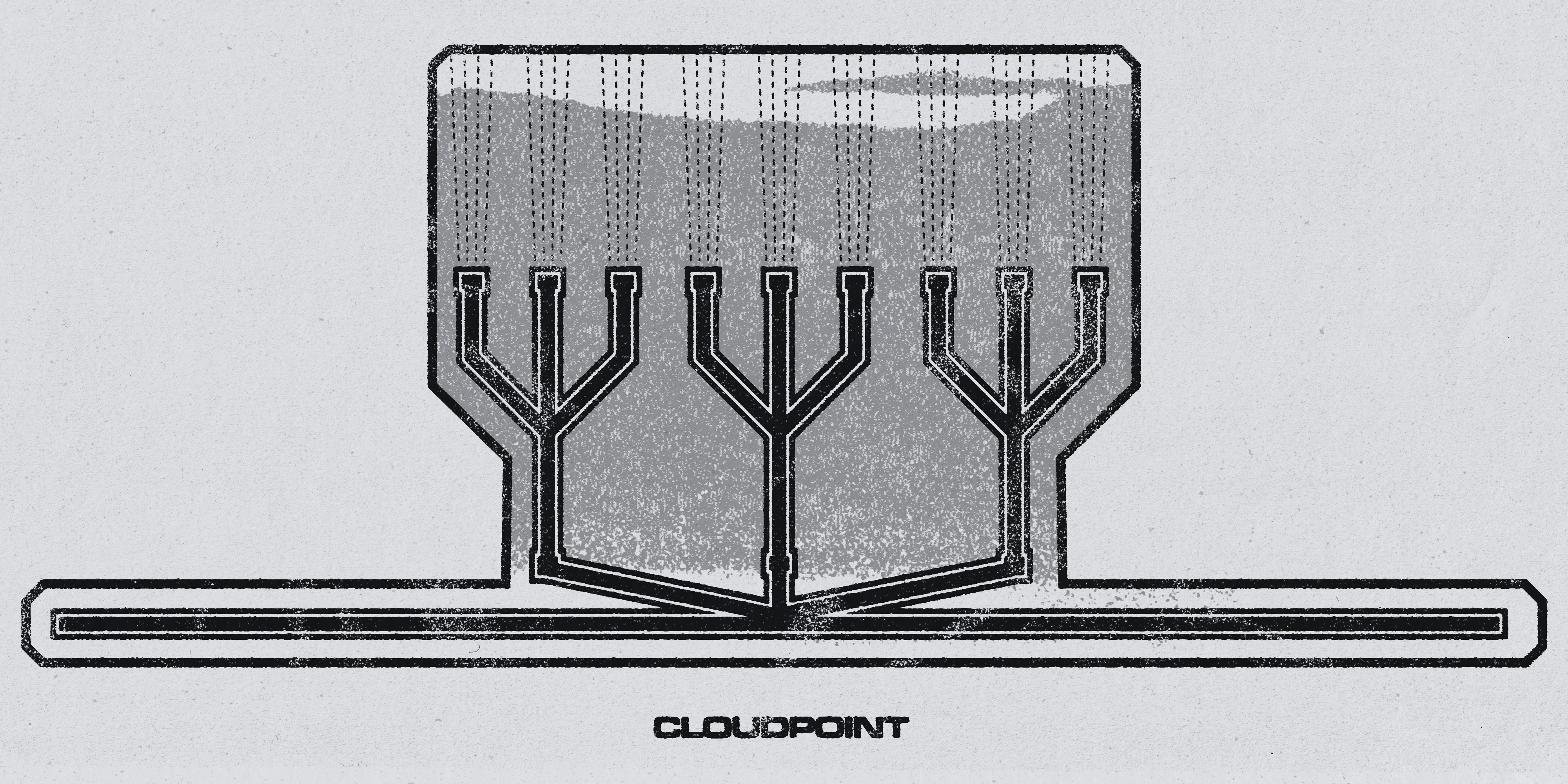
Eventually he just drops to his knees and scrabbles with gloved hands in the snow until he touches metal, then works his way along the buried pipeline’s length from there until he finds the point where the pipe rises into sixteen vertical segments painted to look like snow-covered saplings.
He digs out a little diagnostic panel on the pipe’s side, fingers aching. But as far as he can tell, there’s nothing wrong.
This cloudpoint has been operating at full capacity for two years. Every day, uncountable gallons of seawater pass through this pipeline, split among sixteen nozzles pointed skyward. By the time it gets here, it’s been treated to pull out most of the salt. It comes out of the nozzles at vacuum-tube speeds, jetting up into the cloudlayer, where—in ideal conditions—the treated water begins the complicated process which he only understands in broad strokes and which will–hopefully, marginally–start to offset the environmental damage that’s been done.
But he doesn’t want to waste too much time here. The issue must be at one of the other points. So he marks ‘CLOUDPOINT #1–ALL CLEAR’ in his logbook and heads back to the sled.
At first he thinks his team count is wrong–impossibly wrong, a mistake he would never make. Even from this distance, he can mark Bruno, Brie, Fritter, Cab, Tito, Goliath, Whiskey and Fou. He counts again, just to be sure. Who’s the extra dog, standing right by Erik? He starts jogging, then running. And when it turns towards him, he sees the glint of metal along its body and the telltale blue LED where bright, intelligent eyes should be.
For a split second he thinks it’s a hallucination, a thirty-year-dormant nightmare come back to haunt him. He is frozen for a lifetime, dragged back into old memories, trapped by old wounds. Then Fou barks and snaps him out of it.
“It followed me home,” Erik says, grinning, “Can I keep it?”
“Esti de calice de tabarnak,” Seb says, still mentally drifting back to older, more painful days. “What the fuck is this, Erik?”
Seb doesn’t remember the military designation for these things. In his former life, they just called them robot dogs. Fully autonomous, difficult to deter or damage, and able to keep on going for just about as long as necessary.
Cadets were taught how to use them for rescues, first, then a few anti-riot operations. Later, those parameters broadened.
“I didn’t think it was still locked onto my coords,” Erik says. He still has a smile on his face. “Must’ve followed me all the way across the country. Pretty cool, huh?”
“Absolutely not,” Seb says. “No.” He climbs back onto the sled.
Erik turns halfway around, awkwardly twisted in the basket. “What? It’s just a robot dog, man. Maybe it can run alongside the sled.”
“It’s a weapon. Tell it to stop following us.”
Erik looks a little embarrassed. “I don’t have the perms anymore.”
Then we’ll just have to outrun it. “Mush!”
****
Seb can’t remember a robot dog’s top speed, so he just creates as much distance as he can. He runs the dogs hard; there’s no peace in the silence today.
But they can’t run forever. Seb makes camp; Erik watches. Soon the dogs are sleeping, nestled close to one another, and Erik’s snoring in a sleeping bag tucked right into the sled’s basket. Seb stays up, looking back out over their trail, watching for the glint of electric blue.
He tries to recall the last time he had a passenger on his sled. Maybe during that brief period almost twenty years ago—no, twenty five now—when he flirted with the idea of offering tours. It had been Sue’s idea really, a combination revenue stream and transparent method of forcing Seb to meet some of the neighbors, if one could call them that. He only ended up taking folks out a handful of times before realizing how much he missed the quiet. Plus, it felt disrespectful, somehow, towards the rewild.
But even then they’d been paying customers. What’s Erik? A criminal, maybe. A washout from the Academy. He wasn’t planning on holding that against him. He had been thinking that maybe Erik just needs what nature needs–a little restart.
The bigger problem is the machine.
How can he trust a man who forgets to mention that he has a combat drone following him around? One with a rudimentary onboard intelligence? Erik says he genuinely didn’t know it was still following him. And, to his credit, it seems docile enough.
But it’s a weapon. It will always be a weapon.
“When it turns towards him, he sees the glint of metal along its body and the telltale blue LED where bright, intelligent eyes should be.”
****
The robot dog—Seb decides to think of it as the machine, refusing to associate it even verbally with his team—catches up to them on the trail. Seb doesn’t carry a gun, only a noisemaker to scare off less-determined predators. So he doesn’t really have any option but to let it follow.1
Even better news—all through the next day, the weather just keeps getting worse.
“Can’t we just wait?” Erik asks. But it doesn’t work like that. Any wind is just going to keep blowing the fallen snow back up in their faces, making it ever more exhausting to keep moving. Every sled ride is a race against time; one that they’re barely keeping pace with.
At their next camp, Seb takes a little extra time to check each dog for any issues. The leads are both doing fine, which doesn’t surprise him. But the wheel dogs, Whiskey and Fou, both seem exhausted. They’re his biggest pair, his wildest, and being at the back of the team is the most physically demanding. He could shift some of the dogs around, give them a little break, but he needs to think about it.
“We’re not making good enough time,” he muses, looking at the map. The machine trots up next to him and he reflexively angles the map away from its questing blue LED eye. “We have to check two more points on the Line, and in case there’s a serious malfunction, we need to get there as soon as we can.”
When Erik doesn’t respond, he looks over and sees him kneeling in the snow near the dogs. Cabernet rolls over on her back and kicks at him, inviting him to scratch. Her eyes roll wildly; her tongue lolls out. Erik looks like he doesn’t know what to do.
“Never had a dog before?” Seb says.
Erik reaches out, rubs Cab on the belly. He grins. “Barely ever even seen one, man.”
Is it really that bad now, back east?
By the time he has the dogs fed and watered, dusk is coming on.
They’re camped on a small rise, not one a steep enough slope that the dogs had any trouble getting up it, but high enough to give them a good view of their surroundings. Seb motions impatiently for the binoculars; Erik’s using them to look at the moon. Eventually he just snatches them.
“Some good news, at least.” He fumbles in his jacket and finds a little logbook, which he hands to Erik without putting down the binoculars. “There’s a herd of bison down there. Mark them in the log, please—‘medium sized herd’, a few hundred individuals.”
“Is that what we’re really doing out here? Going on safari?”
Seb lowers the binoculars. In the failing light, Erik looks older, shadows painting a solemnity into his face that feels at odds with his naive, careless attitude.
“You don’t know much about the rewild, do you?” Seb says, not really intending it as a question.
“I’m not from around here. So, what are you, some kind of, whatever, historical reenactor?”
Seb turns back towards their little camp. “Among other duties, I track the reintroduction of these species.”
“Going camping and looking at animals, basically.”
“Don’t minimize it. The point of the rewild is to let nature take care of things, maybe start healing.” He’s never had to explain this to a stranger. He’s pretty sure they teach this in kindergartens all over Alaska.
Erik stands a little straighter. “Man, we couldn’t even stop ourselves from wrecking nature, how the fuck is it supposed to fix itself?”
“Look around.”
Erik doesn’t look around. Instead he stares at Seb like the older man is going insane.
“I’m serious. Look around. What do you see?”
“A weird old man, and a shit-ton of snow.”
“Right.”
“Just snow,” Erik says, laughing. “Not a single tree, or bush, or anything else. How is that nature healing itself?”
Seb hates explaining this part even more. He’s never been good at expressing an idea without sounding like he thinks he’s talking to an idiot. “The more bison reintroduced here, and reindeer, and moose, the more saplings get chewed up and eaten, and the more shrubs get trampled, and the more big trees have their bark stripped off, which eventually kills them. Meaning…”
“Less trees?”
“Fewer trees.”
Erik has an incredulous look on his face. “How could less trees be a good thing?”
Seb forces a smile. “It’s not that it’s fewer trees. It’s that there’s less vegetation cover, and so, more snow cover. And the more snow, the higher albedo—basically, more reflection of sunlight, which means cooler temperatures, which means more permafrost that doesn’t thaw into mud soup every summer. Which, overall, means nature fixing itself.”
Erik laughs again. “Seems like it’d be more efficient to just blow up the Academy, or something.”
Seb doesn’t laugh back. He thinks about something Sue told him once. “It’s serious. Doing something like increasing the amount of reflection by a tiny percent might not seem big, but it’s doable, and if it’s doable, we have a duty to do it.”
“I got some reflection for you: we could be getting this done ten times faster with a snowmobile.”
“Yeah, alright. Go get some sleep.”
****
There are hundreds of miles to go.
The long run is the hardest thing Seb does every season. And every time, he starts to wonder if his body can take it anymore.
He’s been doing this for longer than most mushers ever did, even back in the golden age—when there were hundreds of teams and stocked roadhouses and dozens of little towns along the routes for resupplying and dropping off injured dogs and anything else a musher could imagine. But then the climate worsened, and a dozen haphazard fixes were enacted, one after the other, a dizzying succession of them until most places just gave up. Only when everything had been torn down could the reconstruction begin.
They ride on, resting as the dogs need, riding when they can. He puts Tito and Goliath in wheel to give Fou and Whiskey a break. The trail rises and falls with the landscape, sometimes becoming so steep that Seb and Erik have to hop out and jog alongside. The machine trudges along behind them, omnipresent, delicate and lightfooted on the surface of the snow. Seb refuses to look at it.
At the top of the hill, Erik surprises him.
“I want to help make camp this time.”
Seb gives him a long look. Then he nods.
He teaches Erik the basics of setting up a camp—unloading necessary gear, the warm meatwater for the dogs, the quick pre-made frozen burritos for the men. The incongruousness of setting up a sleeping bag despite knowing you’ll be getting back on the trail in a few scant hours.
After the work is done—and it does go faster with two, even if Erik’s inexperienced—he heads off to check what he’s really here for: the next cloudpoint.
“Kid,” he says. “Stay here. I’m going to check on something.”
“What for?” Erik says.
“Because it’s what I’m here to do. Need to see what’s wrong with this pipeline.”
That got Erik’s attention. “Pipeline? Oil in it?”
“Criss de calice, no. It’s water. Piped in from under a glacier.”
“For, like, drinking?”
“Sure, if you want to call it that,” Seb says. “For the clouds to drink.”
“I’m starting to think you’re just making this shit up as you go.”
“That’s just because you don’t understand it.”
Erik follows him, seemingly with the express purpose of mocking Seb’s life’s work. The machine, unfortunately, trails along behind them both.
“So the Line just spits out water all day? Seems pretty wasteful, Sebastien.”
“That’s very funny.”
“I’m just saying,” Erik continues. “Your rewild seems like it could use some rethinking. Back home, the Academy would kill to control this much water.”
“Yes,” Seb shoots back, “Using hordes of machines identical to the one following you around.”
That shuts him up.
“Doing something like increasing the amount of reflection by a tiny percent might not seem big, but it’s doable, and if it’s doable, we have a duty to do it.”
This cloudpoint is easier to find, with the nozzles poking out of the highest point of the hill. He starts fiddling with the diagnostic panel.
“So it just shoots water up to make clouds?” Erik asks.
“Huge oversimplification.”
“Is it?”
“Specially treated seawater, taken from the undersides of glaciers to slow their basal sliding. The Line doesn’t exactly make clouds, it’s salting them. And can you guess why?”
“Some bullshit?” Erik guesses. “Because salty clouds have a chance of saving the planet, somehow?”
“Albedo.” Erik doesn’t react, so Seb rephrases it. “More reflection. Just like the—”
“Oh, just like the bison and snow thing!”
He’ll take it.
But the diagnostic panel turns up nothing. Seb’s starting to wonder. If the malfunction is at the furthest cloudpoint, then speed is even more critical than he already thought. Which in turn means that these delays are even more problematic than he feared.
They rest for a little while, just up until the dogs are getting jittery. Then they push on.
****
The next stop is a long-abandoned roadhouse where Sebastien sometimes caches supplies. He thinks about leaving the machine outside, but it follows Erik in while the door is propped open. Probably for the best, he guesses—if it gets damaged by the snow Erik will throw a fit and that would slow them down.
Hours driving straight into the wind has left the dogs exhausted. They flop together in a big pile by the fireplace, where Seb gets a delicate little fire going. Convincing Whiskey to eat his food is concerningly difficult; it’s never a good sign when a tired dog doesn’t have any interest in eating.
Seb gives him an extra check, just to confirm what he already suspects. And when his hands run over Whiskey’s front left paw, the dog yelps in pain.
“Shit,” Erik says, “What’s wrong? Is he upset?”
“He’s hurt.” Seb curses himself. If he’d been less distracted on the last section of the run, maybe he would’ve been able to prevent this. He doesn’t even know how it happened. Most likely Whiskey just twisted his ankle in a moosehole—a divot where a moose stomped by. And–Whiskey being Whiskey—he toughed it out until they could make it to safety.
The team is already overtaxed as it is. With one of the wheel dogs injured, they’ll be dramatically slower.
Seb heads into the shallow cellar so Erik can’t see his face. Down here, the earth itself keeps his cache chilled. He starts shoveling handfuls of dried meat into his pack, counting out days. At their new speed, food is going to be an issue. “We’ll stay here overnight,” he calls up to Erik. “Get some real rest in. Hopefully the dogs will feel a little more energetic in the morning.”
Will they, though?
Years ago, Sue told him all about the famous mushing runs of history. The number of times that teams went out into the wilderness bearing news, food, supplies, medicine, and made it out alive. Tales of heroic dogs and brave mushers,
Then she told him that those were stories. Exaggerated versions of the truth. The rewild will kill you, she told him, just as good as the regular wild would’ve. None of those teams made it without support. Without using every lifeline available to them.
Tabarnak.
He knows what he has to do, and he hates it.
****
He’s surprised the harness fits so well.
“It looks like it was made for him,” Erik says.
“For it.”
“Shouldn’t he get a name, if he’s going to be on the team?”
“Name it yourself.”
“Will do, boss. Robot dog, I’m assigning you a new designation: Silver Cloud.”
Seb rolls his eyes.
****
Seb would never be caught dead admitting how well this is working.
He has Silver in Whiskey’s typical spot, bringing up the rear. He figured putting it as close to the sled as possible made sense. Maybe he just wants to keep a close eye on it. But it’s doing an uncannily great job—learning from the other dogs as it runs, maybe, or maybe just naturally capable of this kind of thing. He’d need to read the manual.
Either way, the team makes great time. With only one point left on the Line, they need the unexpected advantage. The weather lets up for a little while, too, and the only sour point is right in front of Seb’s eyes, the silver chassis of the autonomous weapon glinting in the sun.
****
They rest when the wind picks up again, bunkering down on the leeward side of a ride.
“I stole him,” Erik says, unprompted.
“Stole who?”
Erik shifts uncomfortably in his sleeping bag. “Silver. I stole him.”
“Yes. I gathered that.” Seb looks over at the dogs, piled up for warmth. The robot dog is standing a few feet away, staring at them. A memory strikes him–Bruno used to do that, stand just outside of the pile until someone invited him in.
“It was on my way out of the Academy. I had a whole plan, man. Break their shit worse than they could repair it, hopefully.”
Seb closes his eyes and lets his mind drift. He can see rows and rows of them, autonomous weapons standing in formation. “Didn’t work out?”
“I barely got out alive. Hitchhiked here because I figured it was far enough away to plan my next move.”
Seb is exhausted. He thinks he may already be dreaming. But, without opening his eyes, he tells Erik something he’s never told anyone here other than Sue.
“I was in the Academy too,” he says. “Decades ago. I’m lucky I got out when I did.”
“No shit?”
“No shit. Figured I’d head out here where people were still trying to make a difference.”
Erik sits up. “Hey. Look. The rewilding stuff is cool, but isn’t it a little small scale?”
“No.”
“Changing the albedo of the clouds and the tundra feels like small potatoes. We need to be bolder, man, if we want to get anything done.”
Seb just smiles. Sleep is coming on fast. He remembers being young; he remembers feeling the fire that Erik feels now. Instead of telling the younger man he’s wrong, he’d rather show him.
****
Even a good night’s sleep can’t clear the exhaustion from his bones. But they’re nearing the last cloudpoint. Process of elimination tells him that the problem is here. It has to be. Then, he can rest.
Erik spots it first. They’re riding the coast, trekking across snowy ice, ever wary of hidden cracks and holes. Seb has the idea—just for a moment—of putting Silver in solo lead, letting it take the fall if necessary. Why does that thought fill him with shame?
Then Erik sees it. He calls out from the basket, Whiskey nestled in a dog bag next to him. The dogs hesitate for an instant, interpreting his shout as a command, and it saves their lives.
A spurt of water comes tearing across the ice like a shot from a cannon, passing just a few yards ahead of the team. For a bare fraction of a second, Seb is back at the Academy–under fire, out of control, terrified. Then he shouts, “Haw!” and the team curves to the left, further out onto the sea ice, out of the cannon’s path.
It fires again, ahead and to the right. The passing jet of water is the size of a city bus, and it scrapes a furrow in the ice. This time, Seb is more prepared, and the team listens as he leads them on a safe angle towards the cloudpoint.
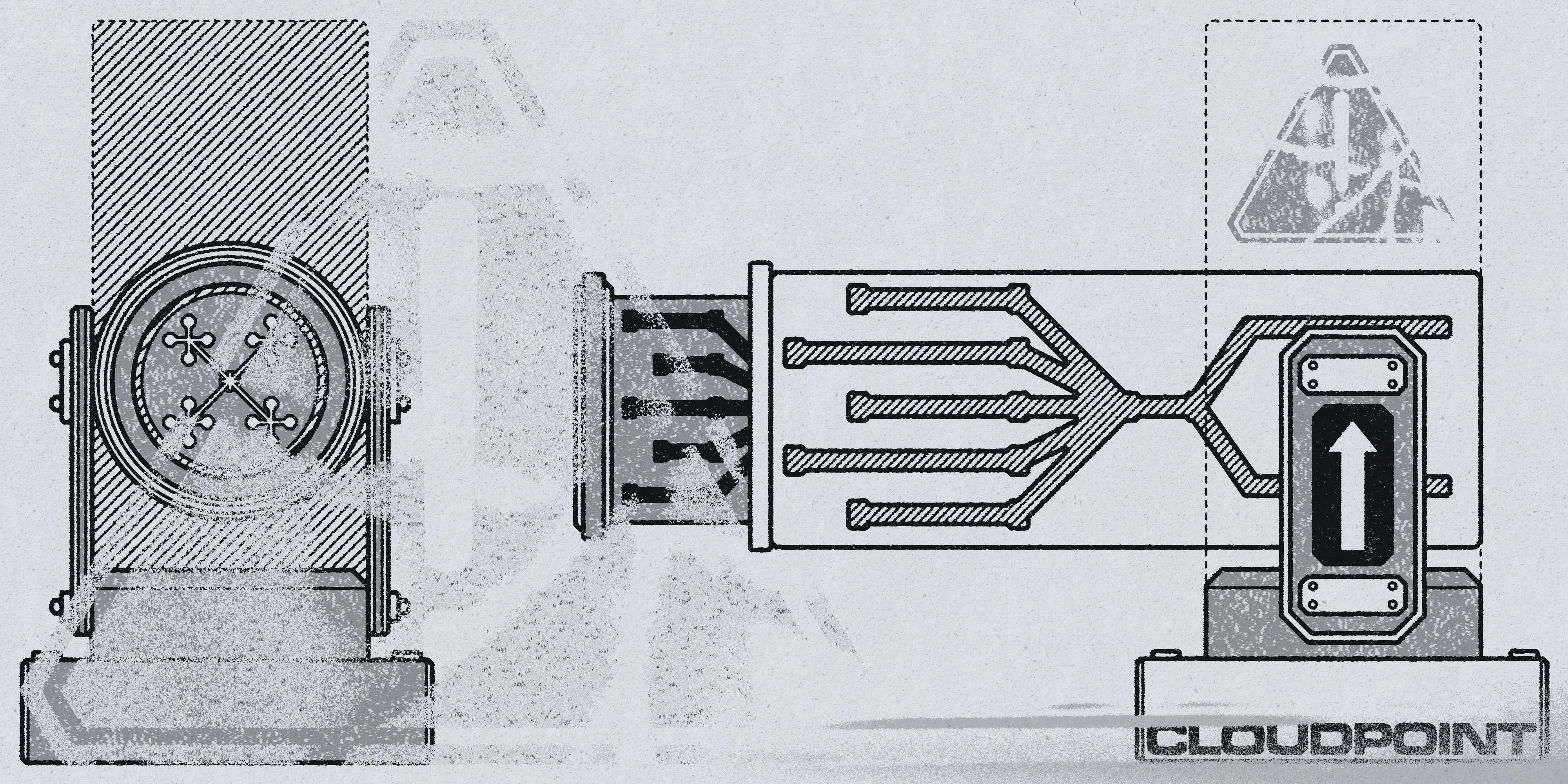
The problem is immediately obvious. Some shift in the permafrost or glacial movement or other catastrophe has tilted the end of the Line wildly. The sensors are broken, too, which explains the water-blast which almost took them out. This is the oldest cloudpoint, built as a proof of concept more for draining subglacial water than salting the clouds, and it bears a key difference from the others—instead of the Line breaking into a dozen small nozzles, it stays as one gigantic pipe, a colossal showerhead, the end of which is now pointed horizontally instead of vertically, blasting intermittent surges of water sideways along the ice instead of up into the sky.
Seb scrapes the snow hook into the ice and the two men get off the sled. They approach wordlessly, flinching whenever another waterspout comes roaring out.
This is when he sees the moose calf trapped under the tilted pipe. This is when he notices the mother moose, standing next to the cloudpoint, watching the team.
This is when he feels the wind whipping at his parka, cutting him to the bone, and knows that they’ll need to act fast.
He exchanges a glance with Erik.
“We can just leave,” Seb says. “We probably should. I’m not sure what we can do here. And if the mother gets defensive…is it worth risking our lives to save a moose?”
Erik shakes his head, fiercely, as Seb knew he would. And the decision is made.
****
In the end, he trusts Erik to do it.
The younger man creeps towards the cloudpoint, one hand extended as though to balance himself. He holds coiled ropes with his other hand, and he moves slowly, slowly enough that the moose makes no move to ward him off. Gently, ever so gently, he hooks the rigging ropes to a cleat on the side of the gargantuan pipe.
Meanwhile, Seb hitches the team up as quietly as he can. At this angle, to pull the pipe back up to how it needs to be sitting, the dogs will need to heave directly onto the sea ice, as though he’s mushing them into the ocean.
Erik slowly retreats from the pipe and the moose. The two men nod to each other, then climb back into the sled.
Seb yells, “Mush!”
The dogs take off running, getting a few feet of running in before their lines snap taut and they have to start pulling harder than they ever have. The head of the pipe groans against the snow, the ice, the permafrost. The dogs strain harder than Seb had thought possible. Whiskey whines from the sled basket.
The mother moose grows agitated. The calf makes a grunting sound.
And just as Seb thinks, this isn’t going to work—
The pipe makes an awful metallic shriek, coupled with the cracking of ice, but it shifts. Inch by inch, painful screech by painful screech, the dogs are pulling the cloudpoint back to vertical.
The instant the calf is freed, it takes off, heading for higher ground, its mother in pursuit. The pipe keeps shrieking behind them, and water starts jetting out of it intermittently again in thunderous blasts.
That’s enough, Seb thinks, we can straighten it out later, slower, more carefully. But he doesn’t open his mouth.
He looks at Erik instead. The cloudpoint will need more repairs, for sure, but they did something good today. Something small, but something good.2
Then there’s another thunderclap, higher in pitch, as the sea ice around them begins to break.
****
It all happens so fast. Bruno, Brie, Fritter and Cab jump back to shore immediately. The sled tilts, pulled sideways by their motion, and the remaining dogs make the jump, one by one. Together, they pull, towards land this time, and Whiskey and the sled make it over before the crack in the ice below them widens and the floe drifts too far.
But Silver’s line snaps.
Later, Seb will wonder if it was the strain of pulling the cloudpoint, or just normal wear and tear from the long run, or some unexpected friction between normal dogsled rigging and Silver’s metal body.
The result is that the dog is left alone on the floe as it starts to drift.
Silver has no relevant training. Silver knows very little about being a sleddog, which is very new to Silver. Silver has never learned how to jump a widening gap over the freezing ocean.
Erik is tangled in the sled’s basket, Whiskey practically on top of him, and there are only seconds to act. They’ve already been so lucky on this trip. Why tempt fate to rescue a weapon?
But Seb doesn’t see a weapon. Or—not a weapon anymore. He sees one of his dogs in danger.
He grabs the towline and jumps.
The juxtaposition of the sled dog team’s relative integration with the environment with a “hard tech” solution that stands out from the landscape and is inherently militarized as well as a surveillance tool is a nice touch in the story, one that also allows the outside world into its isolated setting. It’s a nice narrative technique that, set against the winter landscape, makes the tension of the difference even starker, no matter where it leads in the story later. (Annotation by Jeff VanderMeer, Guest Editor)
It’s easy to forget that a “thaw” might start with some small act, some decision that goes against the percentages or the odds—that the ethics behind our decisions matter, even, or perhaps especially, in the day-to-day of whatever our particular job or existence consists of. (Annotation by Jeff VanderMeer, Guest Editor)
Bringing Sci-Fi Down to Earth…
Tractor Beam is a soil-based Sci-Fi publication that explores speculative ideas around farming, food, earth sciences, and beyond, imagining a positive future here on Earth (in the earth). Our goal is to connect people to regenerative agriculture and soil health in a meaningful way. We call it “soilpunk.”