

Something's Rotting, A Note From Patricia Kaishian, Issue 3 Guest Editor
Introducing the fall issue with thoughts on life, death and mushrooms from Guest Editor, Patricia Kaishian

Hi Soilpunks,
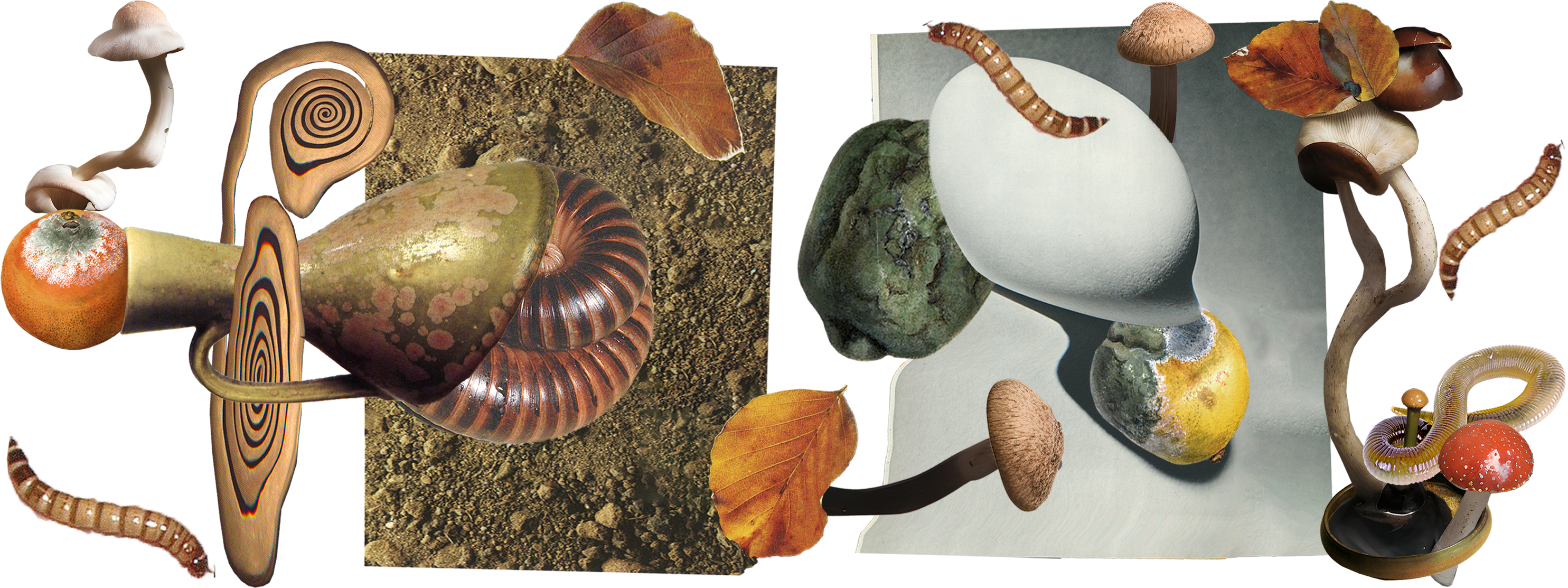
Every metamorphosis requires some kind of breakdown. Tomorrow marks the Autumn Equinox, the beginning of a new season and the launch of Issue 3: SOMETHING’S ROTTING. Join us as we fall into decay! Below is a sneak peek of the cover art. 🍄🌱🪱
We’re also thrilled to announce Dr. Patricia Ononiwu Kaishian (@queendom_fungi) as the guest editor for Issue 3!
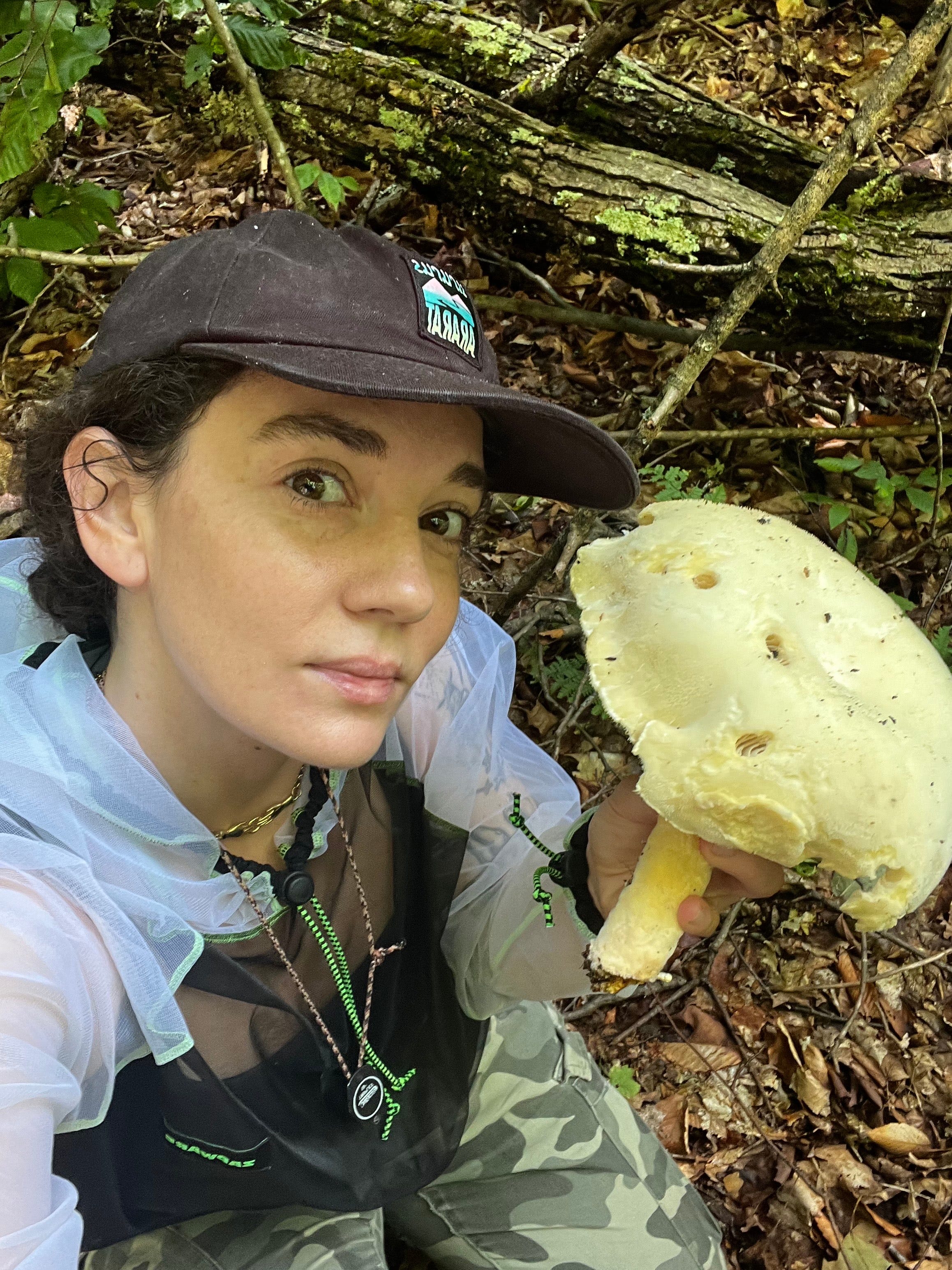
Dr. Kaishian is the author of Forest Euphoria: The Abounding Queerness of Nature, a blend of memoir and science writing that challenges our expectations of what is normal, beautiful, and possible. She holds a PhD in mycology from SUNY College of Environmental Science & Forestry, and is the Curator of Mycology at the New York State Museum where she studies fungal biodiversity, taxonomy, and ecology.
You can learn more about the important work she does here. Read on to hear her thoughts on this collection of Tractor Beam stories.
The apocalypse has already happened and things can always get worse.
These are both frameworks that, ironically, keep me tethered to a type of restrained, action-oriented hopefulness. Thinking in this way prompts me to take stock of my fundamental needs—both material and spiritual—and perhaps nothing is more central than my relationship with and access to biodiversity.
There is no world in which humans can survive without a bounty of innumerable companion species, not least of these are fungi. And it is when I am amongst other species, in a mushroom-laden forest particularly, that I feel my greatest capacity for hope. My favorite stories, therefore, feature biodiversity (and fungi especially) not as an afterthought or a static backdrop, but as a central, dynamic character.
In Something’s Rotting, we are taken through hypothetical futures and worlds in which fungi challenge, support, underpin, complicate, decompose, and/or collaborate with the lives of humans. Readers are prompted to consider decay as the ordinary and ubiquitous yet transformative force that it is—something that comes for all of us eventually. Sometimes decay is tender, sometimes it is traumatic. Sometimes decay is new life bursting with potential, sometimes it is unclear.
“Sometimes decay is tender, sometimes it is traumatic. Sometimes decay is new life bursting with potential, sometimes it is unclear.”
“The apocalypse has already happened,” keeps me from spiraling into a state of perpetual victimhood and self centeredness—the worst the world has to offer, is not, in fact happening to me. Not right now, at least. But I come from a lineage of genocide survivors. They survived an apocalypse — the total loss of family, friends, relationships to land and species, language, and material wealth — they were, I am, a post-apocalyptic people. Hundreds of years of chattel slavery is an apocalypse. The colonization of the Americas is an apocalypse. Though the particulars are unique, we are not the first to struggle.
“Things can always get worse,” keeps me from becoming complacent. Though the worst has not befallen me personally, any action that can stave it off—if even for a moment—must be taken. The cruelty of the world stalks us all. The profound luck afforded to me by the happenstance of my birth must be used to honor those who came before me and in service of those who are here now, and who will follow.
Central to both of these frameworks is gratitude. The dire tone of these messages evinces a need to take stock of our fundamental needs. What does a life of dignity look like, materially? What does a life of dignity look like, spiritually?
Look at all that I have to lose.
How lucky I am to have all of this.
The urgency of these frameworks challenges us to call upon lessons from post-apocalyptic peoples—how did they survive (if even for a moment)? What can’t we live without? What does it mean to be in community? Will I discover my best or worst self when the social order decays?
“Will I discover my best or worst self when the social order decays?”
Sci-fi is a space for asking these same questions. We can unfurl these causal chains of human behavior to both imagine a brighter future and caution an even bleaker one. We can practice decomposing the social strictures that stifle human flourishing. We can play out who we become when our institutions rot—for better or for worse.
These stories also remind us that, whatever lies ahead on the human journey, we will never be fully alone.
Patricia Ononiwu Kaishian, Ph.D.
Mycologist and Author of Forest Euphoria: The Abounding Queerness of Nature
Stay tuned…
Make you’re subscribed to get the first look at all of Issue 3’s stories as they drop on our website, right here on Substack and in your inbox!
Know someone who is an avid sci-fi reader, passionate about climate work, or loves to get their hands dirty in the soil? Spread the word and share our newsletter. And give us a follow on Bluesky and Instagram to stay connected on the latest. Let’s grow a better future together.